
The patient is a 10-year-old boy who received a blow to the forearm when he fell at home. He presented with local swelling and tenderness on exam, complaining of severe pain in his wrist. View the x-rays taken (Figure 1 and Figure 2) and consider what your diagnosis and next steps would be. Resolution of the case is described on the next page.
Read More
December 2007
A 20-Year-Old Male with Chest Pain
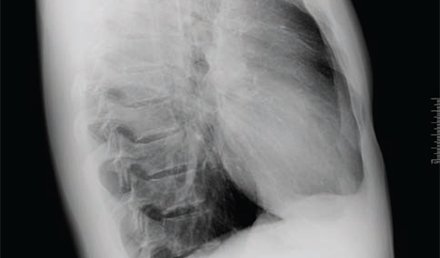
Urgent message: Atypical chest pain in a young male offers a challenge solved by ordering—and assessment—of the appropriate imaging. Shannon Dowler, MD The patient is a 20-year-old white male who presented to urgent care with a two-week history of mild dyspnea, with the onset of chest pain in the prior 24 hours. He denied wheezing, vomiting, and recent trauma, and reported that he has tried no medications for his symptoms. Further discussion with the patient …
Read MoreThe Limping Child in the Urgent Care Center
Urgent message: The ability to evaluate children presenting with a limp—and to recognize red flags that help distinguish those to treat from those requiring immediate referral—should be within the purview of the urgent care clinician. Raymond W. Liu, MD, Hadeel Abaza, MD, and Allison Gilmore, MD A limping child without a clear traumatic history or diagnosis is a common presentation to an urgent care center. The broad differential diagnosis can be daunting, with causes that …
Read MoreThe International Face of Urgent Care
You thought you were alone on an island trying to navigate through the trials of urgent care. You thought you were the only one faced with the clinical and financial challenges. Hopefully, you have discovered the Urgent Care Association (UCA), attended one of the conferences, and shared in the delight of collaborating with colleagues who share your questions, your challenges, and your desire to make a difference one patient at a time. Hopefully, you recognize …
Read MoreAbstracts in Urgent Care: January, 2007
Modes of Administration of Antibiotics for Symptomatic Severe Urinary Tract Infections Key point: There is no evidence suggesting that oral antibiotic therapy is less effective for treatment of severe UTI than parenteral or initial parenteral therapy. Citation: Pohl A. Modes of administration of antibiotics for symptomatic severe urinary tract infections. Cochrane Database of Systematic Reviews. 2007, Issue 4. Urinary tract infection, worldwide, is a major source of disease in children and adults. Although standard management …
Read MoreDeveloping Data: December, 2007
As an emerging distinct practice environment, urgent care is in the early stages of building a data set specific to its norms and practices. In Developing Data, JUCM will offer results not only from UCA’s annual benchmarking surveys, but also from research conducted elsewhere to present an expansive view of the healthcare mar- ketplace in which urgent care seeks to strengthen its presence. In this issue: How is patient satisfaction affected by the length of …
Read MoreFollow-up Questions Regarding Post – operative Care and ‘Established’ Patients
DAVID STERN, MD (Practice Velocity) Q.I was curious about your response to a case listed in Coding Q&A in the November issue of JUCM. The case described a patient who returned for reopening of a wound due to infection. The physician then cleansed and re-sutured the wound. Although I agree about the postoperative care in general, I wonder if modifier -79 would be appropriate in these circumstances. According to instructions by the AMA, this modifier …
Read MoreAbstracts In Urgent Care: December, 2007
A 14-year-old who took a fall two hours prior to presenting to the urgent care clinic
The patient is a 14-year-old who took a fall two hours prior to presenting to the urgent care clinic. The left ankle is swollen and unable to bear weight, but the patient is otherwise healthy. View the x-ray taken (Figure 1) and consider what your diagnosis and next steps would be. Resolution of the case is described on the next page.
Read More