
Case A 23-year-old man presents to an urgent care with pain at the distal end of his left clavicle that began the previous day after he fell onto his left shoulder while mountain biking. His pain is constant and sharp and worse when moving his left arm and shoulder. He does not have fever, vomiting, chest pain, shortness of breath, or abdominal pain, and he has no head injury, no head or neck pain, and …
Read MoreEvaluating Chest Pain in Urgent Care— “Catch 22 and the Three Bears”: Part 2
Lee A. Resnick, MD, FAAFP In my last column, I introduced a framework for evaluating chest pain in urgent care. In this month’s column I discuss a risk and probability stratification that can assist in disposition decision-making. The following discussion considers existing evidence, but there is no formal guideline for this process in the outpatient setting. Our goal is to make a risky scenario into something we can live with. This model is for risk-stratification …
Read MoreEvaluating Chest Pain in Urgent Care— “Catch 22 and the Three Bears”: Part 1
Lee A. Resnick, MD, FAAFP What can Joseph Heller and Goldilocks teach us about managing no-win situations in urgent care? As it turns out, if you look under the covers of Baby Bear’s bed, you might find something meaningful, perhaps even something that’s “just right.” Take the classic no-win situation when patients present to urgent care with chest pain. Without a definitive and reliable test to guide our decision making, we are stuck with the …
Read More
Chest Pain, Bradycardia, and ECG Changes in Acute Cholecystitis
Urgent message: Urgent care clinicians should consider the possibility of cholecystitis when evaluating patients with cardiac symptoms. A delay in diagnosis may lead to serious complications, including sepsis. ALONA D. ANGOSTA, PhD, APRN, NP-C, and BRYAN HOLMES, NREMTP Introduction Patients with acute cholecystitis typically complain of right-upper-quadrant pain that radiates to the right shoulder and back, fever, and leukocytosis.1 The pain may also be associated with nausea or vomiting. However, acute cholecystitis can mimic cardiac …
Read More
December 2014
Abstracts in Urgent Care: December, 2013
Long-term survival following pneumococcal pneumonia Key point: Pneumococcal pneumonia foretold considerably higher 10-year mortality than the expected rate. Citation: Sandvall B, Rueda AM, Musher DM. Long-term sur- vival following pneumococcal pneumonia. Clin Infect Dis. 2013;56(8):1145-1146. Before antibiotics, pneumonia was called “the old man’s friend” for carrying the old and infirm to a swift and relatively painless death. Now that short-term survival after pneumonia is the rule, does the disease provide any long-term prognostic information? Veterans …
Read MoreClinical Challenge: May, 2013
The patient, a 22-year-old woman, presented with a complaint of chest pain. View the image taken (Figure 1) and consider what your diagnosis would be. Resolution of the case is described on the next page.
Read More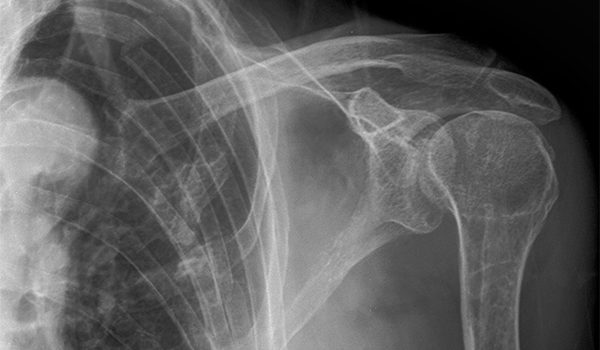
80-year-old male who suffered a blow to the left side of his chest
The patient, an 80-year-old male, suffered a blow to the left side of his chest. View the image taken (Figure 1) and consider what your diagnosis would be.
Read More
The Role of Urgent Care Centers in Regional Acute Coronary Syndrome Care
Urgent message: Patients with chest pain/acute coronary syndrome often present in outpatient medical settings—including urgent care centers—not designed to treat life-threatening conditions. Exclusive new data suggest that urgent care centers need to be integrated into pre-hospital cardiovascular care pathways. JASON T. WEINGART, MD, THOMAS P. CARRIGAN, MD, MHSA, LEE RESNICK, MD, DANIEL ELLENBERGER, BS, DANIEL I. SIMON, MD, and RICHARD A. JOSEPHSON, MS, MD Emergency medical services and hospital-based emergency departments (EDs) are typically incorporated …
Read More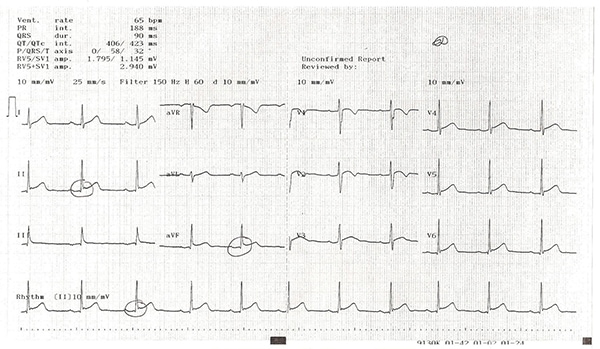
17-year-old male has persistent chest pain
The patient, a 17-year-old male, presented with a family member to an urgent care center with a history of chest pain for 2 weeks He denied shortness of breath, radiating pain, fever, or any other similar symptoms. His vital signs were stable.
Read More