An Evaluation of Unnecessary Prophylactic Antibiotics For Clean Lacerations

An Evaluation of Unnecessary Prophylactic Antibiotics For Clean Lacerations

Urgent Message: Prophylactic antibiotic prescribing for patients with clean lacerations is a common but unnecessary practice. Rates of prescribing did not differ based on type of provider or physician specialty in this study of 20 urgent care centers. Michael Smart, PhD; Jennifer Bush, MSN, APRN, FNP-C/ENP-C Keywords: antimicrobial stewardship; prophylactic antibiotics; laceration repair; urgent care Abstract Background: Oral prophylactic antibiotics for clean lacerations that require suture repair are commonly prescribed when they are unneeded. We …

Read More
Increased Incidence of Pneumonia in Pediatric Urgent Care

Increased Incidence of Pneumonia in Pediatric Urgent Care

Urgent Message: Pediatric after‑hours care clinics experienced a significant rise in radiographically confirmed pneumonia over a 2‑year period, paralleling national increases in Mycoplasma pneumoniae infections. Morgan McBee, MD; Leslie Spence, MD; Jeanne Hill, MD; Leah S. McBee, MD Keywords: pediatrics; community-acquired pneumonia; mycoplasma pneumonia; after-hours care; radiography, thoracic Abstract Introduction: Pediatric community-acquired pneumonia typically occurs at a rate of approximately 20 visits per 1,000 children in the population. Multiple reports and data from the Centers …

Read More
The Impact of Parental Pressure on Providers Practicing in Pediatric Urgent Care

The Impact of Parental Pressure on Providers Practicing in Pediatric Urgent Care

Urgent Message: Pediatric urgent care providers commonly experience pressure to satisfy parental expectations, which may alter clinical decision making, increase stress levels, and/or impart barriers to administering quality care. Keywords: parental pressure; antibiotic prescribing; shared decision-making; pediatric urgent care; patient satisfaction; clinical decision-making Daniel Moscato, MS, PA-C; Sara Winter, MS, PA-C Abstract Background: Patient-centered care focuses on strengthening patient participation in their own healthcare. Although advantages to such care exist, intended shared decision making between …

Read More
Algorithmic Prediction of Utilization and Financial Viability Modeling for Point-of-Care Ultrasound (POCUS) in Adult Urgent Care Patients

Algorithmic Prediction of Utilization and Financial Viability Modeling for Point-of-Care Ultrasound (POCUS) in Adult Urgent Care Patients

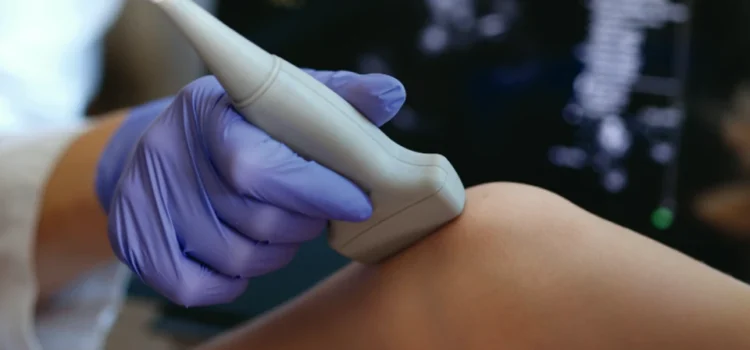
Urgent Message: The prediction model developed for this study suggests that point-of-care ultrasound implementation could have both clinical utility and fiscal viability in an average urgent care center. Future work should validate the prediction model in a real-world urgent care setting. Key Words: point-of-care ultrasound; POCUS utilization; urgent care ultrasound; return on investment; financial modeling; implementation planning John Weissert; Joshua Russell, MD, MSc, ELS, FCUCM, FACEP; Tatiana Havryliuk, MD Abstract Introduction: Point-of-care ultrasound (POCUS) use …

Read More
Improving Chart Closure Time in a Pediatric Urgent Care Setting

Improving Chart Closure Time in a Pediatric Urgent Care Setting

Urgent Message: Quality improvement projects can increase the percentage of charts closed within 1 hour of patient discharge at pediatric urgent and express care locations to ensure timely documentation. Key Words: Electronic Health Records, Documentation, Pediatrics, Ambulatory Care, Patient Safety, Quality Improvement Kileen Fernandez, MS, APRN-CPNP-PC; Lisa Ziemnik, MD, FAAP; Beth Williams, MBA, BSIE; Abiodun Omoloja, MD, MBA, CPE, FASN, FAMIA; Jennifer Morris, MS, APRN-CNP-PC, RNC-NIC; Maddie Mock, BSME; Thomas Geglein, BSN, RN, MBA; Kimberly …

Read More
Analysis of Short Course Systemic Glucocorticoid Prescribing in Urgent and Convenient Care Clinics

Analysis of Short Course Systemic Glucocorticoid Prescribing in Urgent and Convenient Care Clinics

Urgent Message: Across a tristate urgent care and convenient care network, systemic steroid use occurred in nearly one-sixth of encounters (15.5%)—72.5% for likely avoidable indications and 66% for acute respiratory infections. The finding highlights the need to establish systemic steroid metrics to drive stewardship efforts.   Paul Hansen, MD; Yang Wang, PhD; Muhammad Naseer, MD Abstract Background: The College of Urgent Care Medicine released a position statement advocating for corticosteroid stewardship best practices in 2022, …

Read More
Brief Report: PrEPare for Action – A Quality Improvement Project for Expanding HIV Screening in the Urgent Care Setting During the COVID-19 Pandemic

Brief Report: PrEPare for Action – A Quality Improvement Project for Expanding HIV Screening in the Urgent Care Setting During the COVID-19 Pandemic

Citation: Hunt E, Greger M, Shipley N. Brief Report: PrEPare for Action – A Quality Improvement Project for Expanding HIV Screening in the Urgent Care Setting During the COVID-19 Pandemic. J Urgent Care Med. 2025; 19(9): 21-23 Download the Article PDF: Brief Report: PrEPare for Action – A Quality Improvement Project for Expanding HIV Screening in the Urgent Care Setting During the COVID-19 Pandemic Urgent Message: A quality improvement program demonstrated the successful integration of …

Read More
Comparing Outcomes for Outpatients Treated With Cephalexin for Uncomplicated Cystitis: Is QID Dosing Necessary?

Comparing Outcomes for Outpatients Treated With Cephalexin for Uncomplicated Cystitis: Is QID Dosing Necessary?

Urgent Message: Patients commonly seek unscheduled care for urinary tract infections (UTIs). Cephalexin is among the most frequently prescribed antibiotics for acute UTI treatment, however, dosing regimens lack standardization. In this small observational study, similar rates of clinical cure and adherence were observed with cephalexin 500 mg dosed every 12 hours vs every 6 hours in patients with cystitis, calling into question whether QID (4 times per day) dosing is necessary. Cassandra Lopane, PharmD; Erica …

Read More
Systematic Rapid Review: Efficacy of Hematoma Blocks for Pediatric Forearm Fractures

Systematic Rapid Review: Efficacy of Hematoma Blocks for Pediatric Forearm Fractures

Shomel Gauznabi, MBChB, FRNZCGP, FRACGP, FRNZCUC, MD; Ivan Koay, MBChB, MRCS, FRNZCUC, MD Urgent Message: There is literature supporting that regional anesthesia, specifically hematoma blocks, is a safe, effective, and well tolerated alternative to procedural sedation for the management of pediatric forearm fractures. Citation: Gauznabi S, Koay I. Systematic Rapid Review: Efficacy of Hematoma Blocks for Pediatric Forearm Fractures. J Urgent Care Med. 2024; 19(x):42-50 Key Words: pediatric forearm fractures, anesthesia, hematoma blocks, urgent care …

Read More
Development of a Positive Urinalysis Criteria Using a Machine Learning Approach

Development of a Positive Urinalysis Criteria Using a Machine Learning Approach

Urgent Message: There are no consensus definitions for what defines a “positive” urinalysis in the pediatric population. This secondary analysis of data from a quality improvement project in a network of pediatric urgent care centers used a machine learning approach to determine which variables on urinalysis most strongly predict a subsequently positive urine culture. Kari Flicker, BS; Jessica Parrott, DNP, CPNP-PC, CNE; Tammy Speerhas, DNP, FNP-C; Turaj Vazifedan, DHSc; Theresa Guins, MD; Jeffrey Bobrowitz, MD; …

Read More
Log In